
Buffalo Chicken Wings
Description
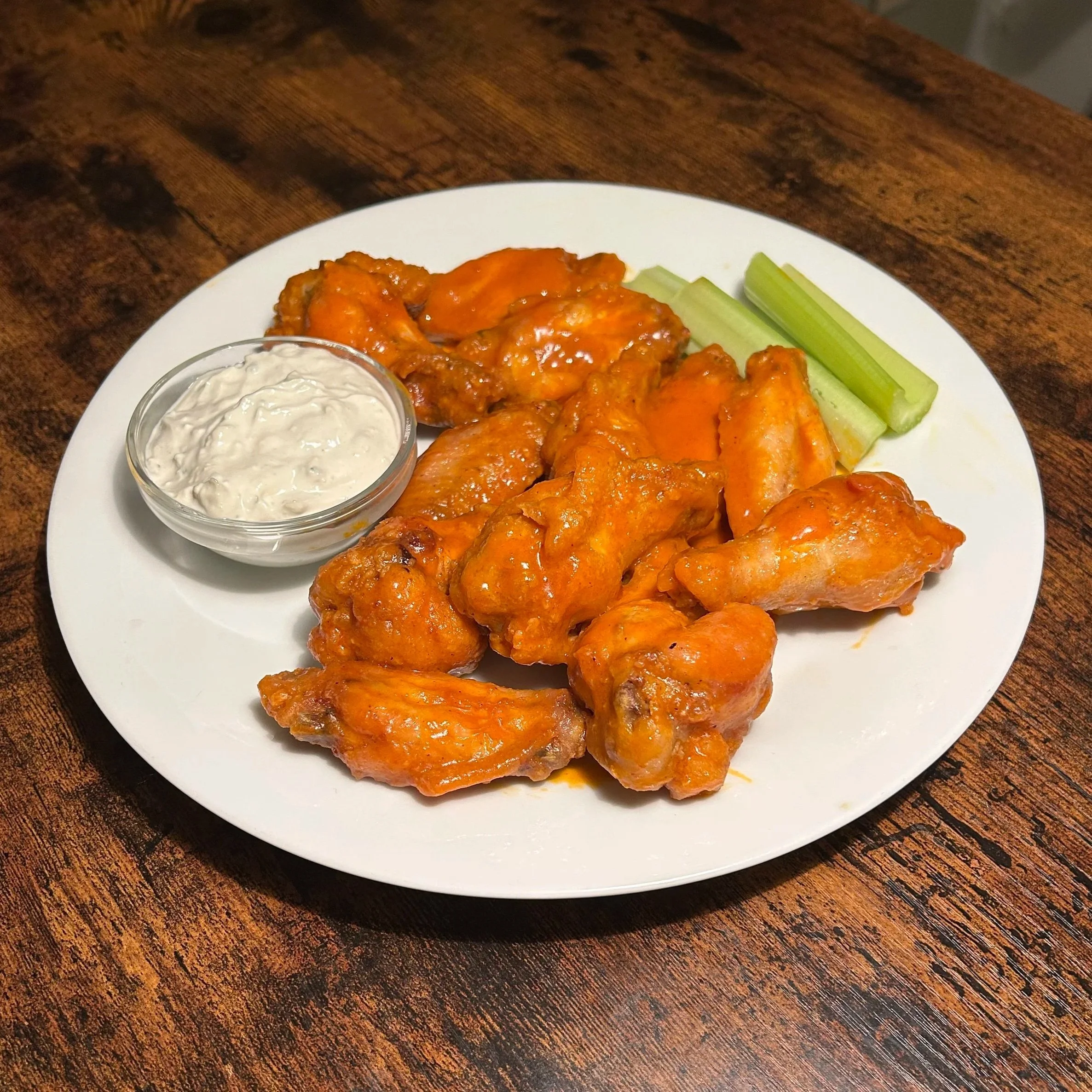
Buffalo wings are perhaps the most iconic type of American bar food that you can find. These fried chicken wings get their namesake from the city of Buffalo, New York, where they first appeared on the menu of the Anchor Bar in 1964. Teressa Bellissimo has long been the undisputed inventor of Buffalo wings. The exact story of how they were invented is a matter of some debate. According to Bellissimo’s husband, Frank, the restaurant received a delivery of chicken wings by mistake that they didn’t know what to do with. Bellissimo’s son claims that his mother invented the dish as a snack for him and his friends to eat after a night of drinking. Regardless of the exact origin story, this item moved beyond the menu of Anchor Bar to other restaurants in Buffalo and eventually grew to become a staple in American bars and causal restaurants.
(Source: Time)
While Anchor Bar is still widely regarded as the first restaurant to serve Buffalo wings, an honorable mention must be given to a lesser-known individual named John Young. In the 1960’s, Young operated an establishment in Buffalo called John Young’s Wings and Things, which offered fried, whole chicken wings served with mambo sauce, among other menu items. There has been an argument in more recent times that Young was in fact the true inventor of Buffalo wings; fried chicken wings were likely unheard of in Buffalo prior to his arrival, as they were generally only found in African-American cuisine at that time. It is very plausible that Young could have introduced fried chicken wings to Buffalo in the early 1960s, however, the variety of wings that he offered differed significantly from the wings that appeared on the menu of Anchor Bar. John Young’s wings were served whole (not separeted into drumsticks and flats), breaded and fried, and served with a sweet & tangy mambo sauce. Teressa Bellissimo’s wings were separated into drums and flats, fried but not breaded, tossed with a butter-based hot sauce and served along with blue cheese dressing and celery sticks, which is identical to the variation that is popular today. The argument could be made that while John Young likely played a central role in popularizing fried chicken wings in Buffalo, Bellissimo was nonetheless the individual that first created Buffalo wings in the format that they are enjoyed today. Regardless of who deserves credit, Buffalo wings remain an institution in the US as a go-to game-day snack and bar food and are worth the effort of making yourself.
(Source: History)
Ingredients
(Serves 4-6)
Blue cheese dip
1 cup blue cheese, crumbled
½ cup sour cream
½ cup mayonnaise
1 tbsp lemon juice
¼ tsp garlic powder
Wings
2 cups vegetable oil
48 chicken wings, mixed drumsticks and flats
Salt
Sauce
1 cup Frank’s Red Hot sauce
½ cup unsalted butter
Preparation
To make blue cheese sauce, mix all ingredients into a bowl until combined.
To make Buffalo sauce, heat the butter and hot sauce over medium heat and cook until butter is melted. Mix together thoroughly and set aside.
Place the chicken wings on a wire rack and season generously with salt. Allow wings to sit uncovered in the fridge for at least 12 hours. Allow wings to sit at room temperature for at least an hour before frying.
In a large wok or Dutch oven, heat the oil over high heat. When the oil is hot, add the wings 12-16 at a time, and fry for 6-7 minutes or until they start to crisp but not yet brown. Drain over a wrie rack and repeat with the remaining wings. Repeat the frying process with the wings, this time frying for 4-5 minutes, or until the outside is brown and crispy. Drain over a wire rack. After all the wings are cooked, you can heat them up briefly in the oven to ensure that they are all the same temperature. Toss in a large bowl with the buffalo sauce, the serve immediately with a side of blue cheese dip and celery ribs.
Notes
You can adjust the heat of the Buffalo sauce with the ratio of butter to hot sauce: or mild, 1:1 ratio, for medium 1:2, and for hot, 1:3.