
Haluski
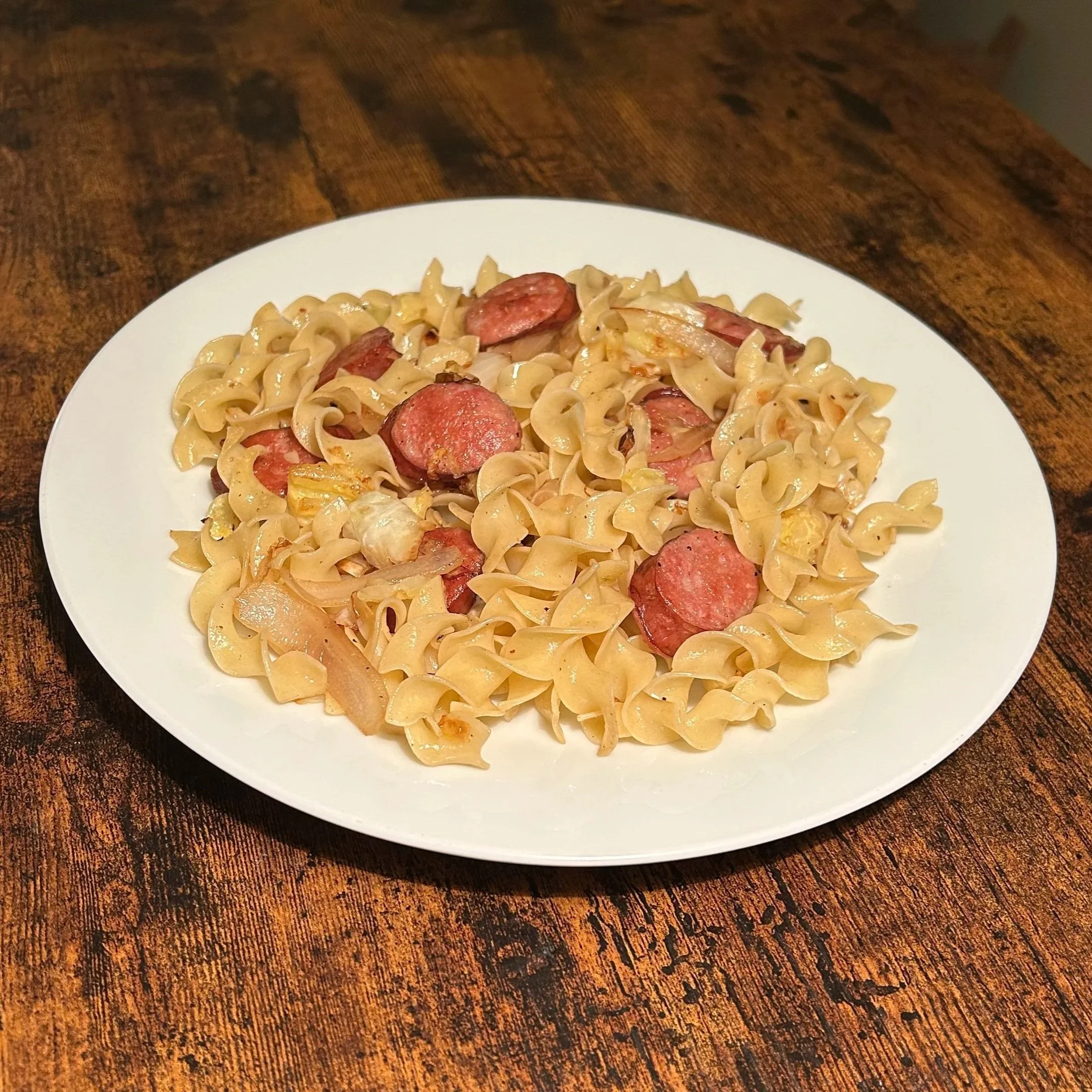
Description
Haluski (often pronounced as Halushki) is a noodle dish of eastern-European origin that gained prominence in areas of the US with large communities of Polish, Czech, Slovakian or Hungarian descent. Despite being associated with Polish cuisine in America, this dish is not originally from Poland. Rather, this dish was adopted by many Polish immigrants who arrived to the US along with other central and eastern-European immigrants. The name “Haluski” originates from Slovak Halušky, which are potato-based dumplings that are often served with bacon and cheese. However, the preparation of this dish is nearly identical to the Hungarian dish of Káposztás Tészta, meaning “cabbage noodles” in English. Haluski is a perfect example of how dishes evolve in American immigrant communities - it started as a Hungarian dish, was given a Slovak name, and eventually became an integral part of Polish-American cuisine. Haluski is still popular today in regions of the US with communities of eastern-European origin, including Philadelphia, northeast Pennsylvania, Pittsburg, and parts of Ohio, Illinois and Michigan.
(Source: Eater)
Ingredients
(Makes 2 servings)
½ medium onion, sliced
1 cup shredded cabbage (80 g)
10-12 kielbasa sausage rounds
1 tsp canola oil (5 ml)
2 tbsp butter (28 g)
2 cups dried egg noodles (80 g)
Salt & pepper
Preparation
In a cast iron, carbon steel or nonstick pan, add the oil and heat over medium high. Add the sausage and cook for 4-5 minutes, until browned. Remove from pan.
Boil the egg noodles per the package directions and drain. Coat with additional butter or oil to prevent sticking.
In the pan that was used for the sausage, add the butter and heat over medium high. Add the onions and cook for 2-3 minutes, then add the cabbage. Season with salt & pepper, and cook until the vegetables are soft and slightly browned. Add the sausage and noodles to the pan and cook for 2 minutes. Plate and serve immediately.
Notes
Feel free to replace the kielbasa with 2 strips of bacon, cut into lardons (this is also very traditional)
Feel free to omit the meat entirely, this is a common preparation for lent.