Sticky Buns
Description:
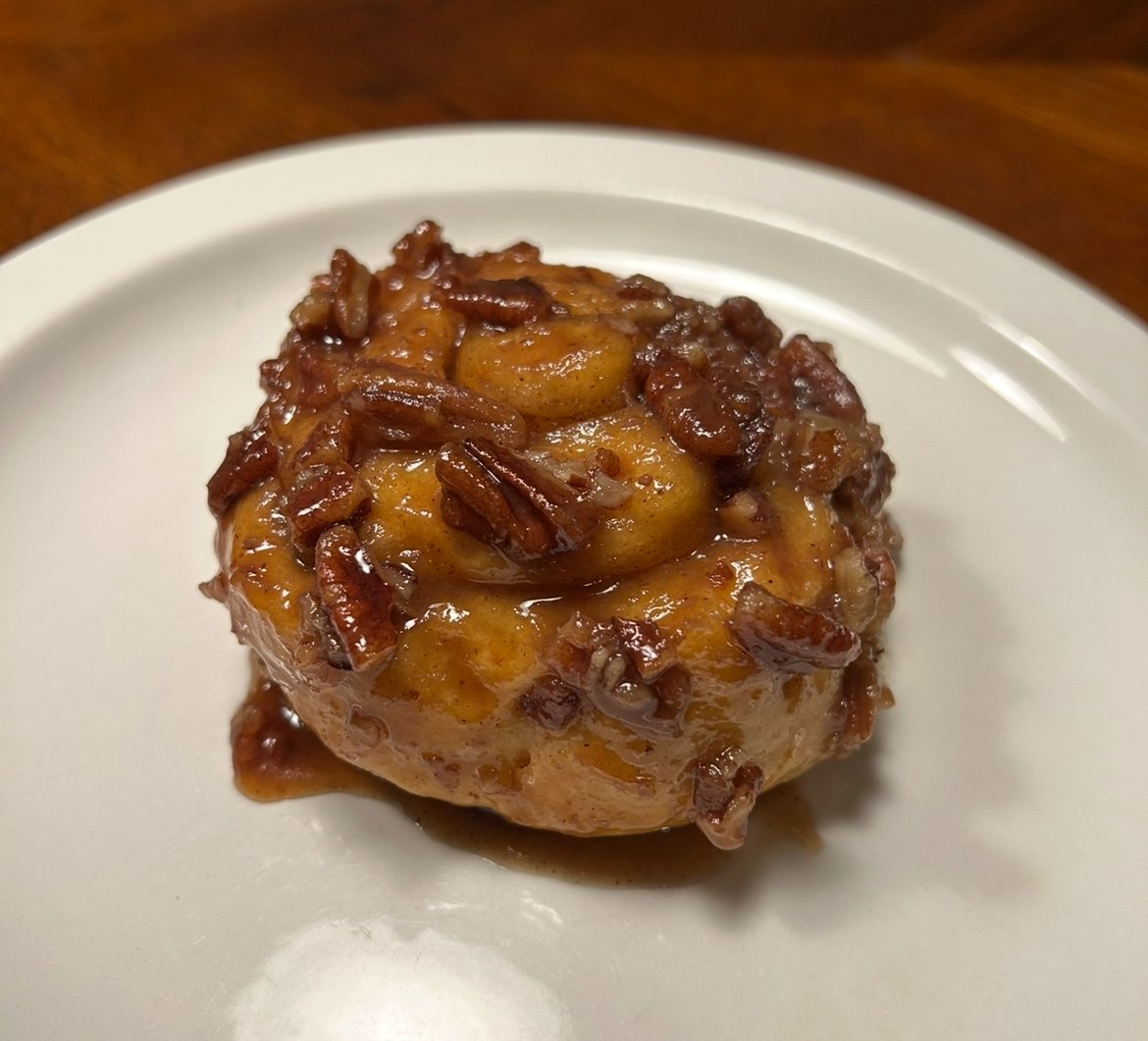
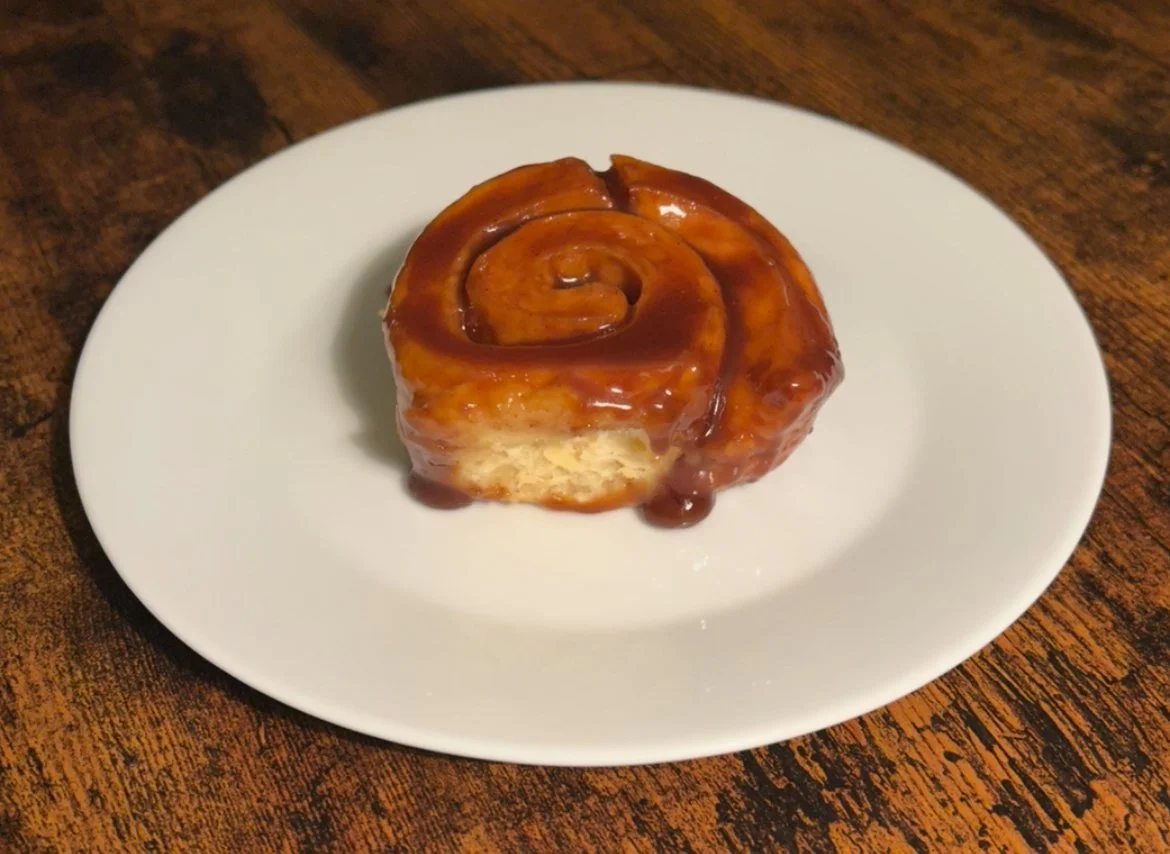
This dish is a close cousin of the iconic American Cinnamon Roll. This dish has its origins in modern-day Germany, where they are known as “Schnecken”. A recipe resembling Sticky Buns first appeared in the 18th century, when German settlers in Philadelphia created a recognizable version of the dish, containing brown sugar, honey and raisins. Sticky Buns are regionally popular in the Philadelphia area, and are also considered to be part of Pennsylvania Dutch cuisine. One of the most defining characteristics of this dish is the sweet, gooey top that is created thanks to the fact that these buns are baked upside down (the top that you see pictured is from the bottom of the baking dish). The classic variation of this recipe is topped with chopped pecans, but they can also be eaten with the addition of raisins or plain, with just the caramel topping.
Ingredients:
(Makes 8 buns)
2/3 cup milk (160 ml)
3 cups flour (375 g)
1 large egg
1 tsp yeast (6 g) - if you choose to not refrigerate the dough, use 2 tsp
4 tbsp butter, melted (58 g)
1/3 cup sugar (80 g)
1 tsp salt (6 g)
Filling
4 tbsp room-temperature unsalted butter (56 g)
2/3 cup brown sugar (120 g)
1 tsp cinnamon (6 g)
Topping
1/2 cup brown sugar (110 g)
1/2 cup heavy cream (60 ml)
1 tbsp corn syrup
1/2 tsp salt (3 g)
Preparation:
In a large bowl, combine the flour, sugar, salt & yeast. Mix in the milk, butter & egg, and mix until roughly incorporated. Cover and let rest 30 minutes. Then, knead the dough on a floured board until it is smooth and elastic, about 5-10 minutes. Cover and allow to rise at room temperature for one hour.
Meanwhile, in a separate bowl combine all of the filling ingredients and mix with a rubber spatula until well incorporated and a smooth paste is formed.
Place the dough on a lightly-floured cutting board. Using a rolling pin, roll the dough into a rectangle that is about 1/8 of an inch (0.3 cm) thick. The dimensions of the rectangle should be roughly 12 x 18 inches (30 x 45 cm). Using a rubber spatula or your hands, evenly spread the cinnamon-sugar filling on top of the dough rectangle. If using raisins, sprinkle them on top of the filling. Then, roll the dough over itself into a cylinder, pinching the bottom to seal. Using a knife, cut the dough cylinder evenly in half. Then, cut each of those halves into halves, and repeat. You will have 8 rolls total. Place each roll onto a parchment-lined baking tray.
Add the sauce ingredients to a bowl and mix until thoroughly combined. Spread out in a 6” x 10” baking dish. If using nuts, sprinkle on top of sauce at this stage. Arrange the rolls in the pan 2 x 4. Make sure to place the end pieces of the log cut-side-down.
At this point, you can cover the tray with foil and refrigerate for 24-48 hours. You can choose to skip this step if you want; I personally think that the fridge fermentation makes the finished product taste better and is more digestible, but again this is optional. Remove the rolls from the fridge and allow them to proof at room temperature for 2 hours.
Preheat oven to 350 degrees (180 C) and then bake, covered with aluminum foil, for 30-35 minutes. Remove from oven and allow to cool for about 5 minutes. Carefully turn the pan upside-down over a serving dish and enjoy.
Notes:
If you choose not to ferment your dough in the fridge, you will likely only need to proof it at room temperature for 1 hour.
You can adjust this recipe to you taste - you can add 1/4 cup (40 g) of raisins to the filling and/or 1 cup (120 g) chopped pecans to the topping… these are classic variations of the recipe.